

(This is the third and concluding part of a three-part series, “WHOSE WATER, WHOSE FUTURE?”, on the Ken-Betwa Project.)
The government, however, presents a different picture. It maintains that the Ken-Betwa Link Project is based on detailed technical and environmental assessments and that its implementation is proceeding in accordance with applicable legal, environmental and rehabilitation safeguards. But environmentalists, affected villagers and water-management experts, including limnologists, have raised serious questions about several of these claims. Bibhuti Pati writes: The government’s assurances may look convincing on paper, but the story on the ground, in the forests and along the river tells us to look deeper.
FRA Act: A Legal Shield Left Unimplemented
For communities facing displacement, the question is not only what compensation they will receive, but whether the law itself is being fully applied before they are asked to leave their homes and ancestral lands.
The Scheduled Tribes and Other Traditional Forest Dwellers (Recognition of Forest Rights) Act, 2006—commonly known as the Forest Rights Act (FRA)—was enacted to address what Parliament described as historical injustice against forest-dwelling Scheduled Tribes and other traditional forest dwellers. The law recognizes a range of individual and community rights over forest land and resources and establishes procedures that are particularly significant when conservation or development projects threaten to displace forest-dependent communities.
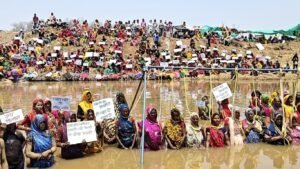
Its relevance becomes even more pronounced in the context of the Ken-Betwa project. In the 2024 Kamlesh Prajapati v. State of Madhya Pradesh case, the Madhya Pradesh High Court examined the question of voluntary rehabilitation in the context of wildlife conservation. The court stressed that consent cannot be considered genuine where it is obtained through coercion, misinformation or an unequal relationship between the parties. It also underscored the importance of compliance with the Forest Rights Act when displacement of forest-dependent communities is involved.
The principle is fundamental: consent cannot be reduced to a signature on a document. For consent to be meaningful, affected families must understand what they stand to lose, what alternatives are available to them, what compensation and rehabilitation they are entitled to, and what the long-term consequences of relocation will be. Most importantly, they must be free to make that decision without pressure.
This raises a difficult question in the Ken-Betwa landscape: when a community has limited economic resources, inadequate access to information and little bargaining power against the state, can its acceptance of a rehabilitation package automatically be described as voluntary?
Development for Whom?
The question becomes even sharper when the distribution of benefits and burdens is examined across state boundaries.
The Ken-Betwa Link Project is projected to provide irrigation to approximately 2.51 lakh hectares in Uttar Pradesh, including areas of Banda, Mahoba, Jhansi and Lalitpur districts. Its stated objective is to strengthen agricultural production and provide greater water security in one of India’s most drought-prone regions.
Yet many of the communities bearing the immediate costs of the project are located in Madhya Pradesh, particularly in the Chhatarpur and Panna districts. They face the loss of homes, agricultural land, forest resources and, in some cases, entire settlements, while a substantial share of the anticipated irrigation benefits will accrue elsewhere.
This creates a classic environmental-justice dilemma: those who bear the environmental and social costs are not necessarily the people who receive the principal benefits.
The issue is not simply about Madhya Pradesh versus Uttar Pradesh. It concerns a larger principle of equitable development. If one community must surrender land and forests so that another region can receive irrigation, the sacrifice must be transparently acknowledged, fairly compensated and accompanied by rehabilitation that restores livelihoods rather than merely relocating households.
The disparity also raises questions about how the success of the project will eventually be measured. If irrigation statistics rise in one state while displaced families struggle to rebuild their lives in another, can the project be described as an unqualified development success?
The Hydrological Question
Alongside the legal and social concerns lies a technical debate over the data underpinning the project.
Critics have questioned whether some of the hydrological assessments rely too heavily on historical datasets that may be three or four decades old. Such concerns have gained significance as climate change alters rainfall intensity, seasonal distribution, drought frequency and river flows across the Indian subcontinent.
A river’s behaviour observed several decades ago cannot automatically be assumed to represent its future behaviour. Changing rainfall patterns and increasingly unpredictable monsoon cycles make long-term water projections considerably more complex.
The government’s position, however, is that the project’s hydrological foundation has been established through detailed studies and long-term datasets undertaken by the National Water Development Agency and other technical institutions. Officials maintain that these assessments demonstrate the availability of surplus water in the Ken basin during the monsoon season.
The disagreement therefore goes beyond whether one set of figures is correct. It raises a broader question about transparency: when a project involves the permanent alteration of rivers, forests and communities, should the underlying hydrological evidence not be available for independent scientific scrutiny?
The government has cited security considerations in relation to the classification of certain river-flow information, given that the Ken and Betwa are part of the Ganga basin, whose waters eventually flow into Bangladesh. For critics, however, restricted access to crucial data makes independent verification more difficult and consequently weakens public confidence in the project’s assumptions.
Is There Another Way?
The debate has also brought alternative approaches to the forefront.
Water conservationist Rajendra Singh, recipient of the Ramon Magsaysay Award, has been among those advocating decentralised water management rather than dependence on large inter-basin transfers. Critics of the Ken-Betwa project argue that restoring and reviving the vast network of traditional ponds, tanks and other natural water bodies across Bundelkhand could substantially improve local water security without requiring the displacement associated with a massive dam and river-linking system.
The proposition is deceptively simple: instead of asking how water can be transported across large distances, first ask how much of the region’s own rainwater can be captured, stored and replenished locally.
Bundelkhand has historically possessed a rich tradition of community-managed water structures. Many of these systems have deteriorated through neglect, siltation, encroachment and changing land-use patterns. Their restoration could improve groundwater recharge, strengthen local irrigation and provide communities with greater resilience during prolonged dry periods.
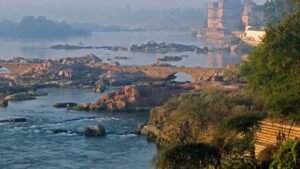
Critics also point to the continuing summer water shortages experienced by villages along the Ken basin. If the river is described as having sufficient surplus water for transfer, they ask, why do communities living beside the river continue to experience acute scarcity?
The answer may lie partly in the distinction between river water availability and accessible water security. A river can carry substantial seasonal flows while surrounding communities remain dependent on inadequate storage, depleted groundwater and poorly maintained local water systems. Sand mining and other forms of riverbed disturbance can further complicate the hydrological balance.
This does not by itself disprove the government’s assessment of surplus water. But it demonstrates why the region’s water crisis cannot be understood solely through the volume of water flowing through a river during the monsoon.
When Is “Voluntary” Really Voluntary?
The question of consent ultimately brings the legal, environmental and human dimensions of the project together.
Internationally, the principle of Free, Prior and Informed Consent (FPIC) has emerged as an important framework for protecting the rights of Indigenous peoples in decisions affecting their lands, territories and resources. The principle requires consent to be free from coercion, sought before a decision is implemented, based on adequate information and obtained through a process that allows affected communities to participate meaningfully.
Its underlying philosophy is simple but powerful: communities should not merely be informed about a decision that has already been made; they should have a meaningful opportunity to participate in decisions that fundamentally affect their lives.
For the Ken-Betwa project, this distinction matters enormously. A family agreeing to relocation after being told that its village will inevitably disappear is in a very different position from a community participating freely in an open process where alternatives, compensation, rehabilitation and long-term livelihood options are genuinely negotiable.
That is why the word “voluntary” deserves particularly careful scrutiny.
If consent is to have legal and moral meaning, it must be informed, documented, transparent and free from pressure. The process must also recognise that the loss of ancestral land cannot always be compensated by money alone.
The Ken-Betwa debate therefore reaches far beyond the construction of a dam or the transfer of water between two rivers. It asks a deeper question about the meaning of development in a democratic society:
Can development be called inclusive when the people who surrender their forests, land and homes have the least influence over the decision—and the benefits are realised largely elsewhere?
The answer will determine not only the legacy of the Ken-Betwa project, but also the standards India sets for future infrastructure projects involving forests, rivers and communities.
What “Voluntary” Really Means
The word voluntary acquires a very different meaning when examined through the lens of the Free, Prior and Informed Consent (FPIC) principle. Consent cannot be considered meaningful merely because residents have been informed that relocation is going to take place or because they have accepted a compensation package. The process must enable affected communities to understand what is being proposed and to participate in decisions that could permanently alter their lives.
The “informed” component of FPIC is particularly important. Communities should have access to clear and comprehensive information about the nature and scale of a project, its proposed timeline, its likely economic, social, cultural and environmental consequences, and the extent to which those consequences can be reversed or mitigated. They should also know who will be responsible for implementing the project, how decisions will be taken, what rights they possess and what alternatives are available to them.
Measured against these principles, questions remain over whether the process described as “voluntary rehabilitation” under the Ken-Betwa Link Project provides affected communities with sufficient information and meaningful participation. Consultation has little value if the fundamental decision has effectively been settled before the community enters the process.
For a family facing the loss of ancestral land, the difference between consultation and participation is profound. Being told about a relocation plan is not the same as having a genuine opportunity to influence its terms.
Rethinking Growth and Justice
The Ken-Betwa project therefore represents a larger test of India’s development philosophy. The central issue is not whether infrastructure should be built, or whether drought-prone regions deserve better water security. They unquestionably do.
The more difficult question is how the costs of such development are distributed.
The tribal communities of Chhatarpur are not necessarily rejecting development itself. Their concerns centre on the terms on which development is being pursued—whether their land, livelihood, cultural connections and legal rights receive the same consideration as the economic objectives of the project.
This distinction is important. Opposition to displacement should not automatically be interpreted as opposition to progress. A community can support improved irrigation and water availability while simultaneously asking why its own rights must be diminished to achieve those objectives.
That is where the concept of growth justice becomes relevant. Development acquires legitimacy not merely from the number of people who benefit from it, but also from the manner in which those who bear its costs are treated.
What Reforms Should Be Considered?
Several measures could strengthen public confidence in the project and make the rehabilitation process more accountable.
First, Gram Sabhas in affected areas should have a meaningful role in decisions concerning relocation and rehabilitation. Their participation must be based on adequate information and conducted without coercion.
Second, the hydrological evidence underlying the project should be made available for independent examination to the greatest extent possible. Feasibility assessments should also incorporate contemporary climate science, particularly changing rainfall patterns, drought frequency and river-flow variability.
Third, rehabilitation should focus on restoring livelihoods rather than treating displacement primarily as a financial settlement. Where legally and practically feasible, the principles of land-for-land and village-for-village deserve serious consideration, particularly for communities whose economic security depends directly on land and common resources.
Finally, decentralised water conservation should remain part of the policy discussion. The restoration of ponds, tanks, traditional water-harvesting structures and groundwater-recharge systems could complement larger infrastructure while strengthening local resilience.
These measures do not necessarily require abandoning the project. They require ensuring that development proceeds with greater transparency, stronger community participation and closer scrutiny of its long-term consequences.
What Are the Provisions and What Are the Key Legal Aspects?
The rehabilitation challenge under the Ken-Betwa project is further complicated because two different categories of villages are involved and they are being relocated for different reasons.
A total of 24 villages are slated for relocation. Of these, 16 villages are associated with the Panna Tiger Reserve, while eight villages are linked directly to the construction of the dam. Although both groups face displacement, the legal circumstances governing their relocation are not identical.
The distinction matters because conservation-related relocation and displacement resulting from a major infrastructure project operate under different statutory frameworks.
For the 16 villages connected with the Panna Tiger Reserve, the Wildlife (Protection) Act, 1972 provides the principal legal framework for relocation from critical wildlife habitat. Broadly, the process can involve acquisition of rights or relocation based on an agreement with residents, subject to the statutory requirements.
Yet the circumstances surrounding these villages raise a complicated conservation question. Many of their residents have lived alongside the reserve for generations. Their presence has not necessarily translated into a direct threat to wildlife. At the same time, the proposed submergence of a substantial portion of the reserve’s critical habitat creates a new conservation challenge, particularly when land is required elsewhere to compensate for habitat that will be lost.
This produces an unusual paradox: communities living within a landscape historically shared with wildlife are being asked to move at the same time that another portion of the protected landscape faces submergence because of a development project.
The legal question is therefore inseparable from the ecological one. If relocation is justified in the name of strengthening wildlife protection, the process must establish clearly why relocation is necessary, what rights residents possess, and whether the proposed alternatives genuinely protect both wildlife and affected communities.
There is also the question of how compensation and rehabilitation interact with the Right to Fair Compensation and Transparency in Land Acquisition, Rehabilitation and Resettlement Act, 2013. The legislation establishes a framework intended to make land acquisition more transparent and to provide compensation and rehabilitation safeguards for affected families. Its principles become especially significant where displacement involves the loss of productive land and established livelihoods.
The Forest Rights Act, 2006 adds another crucial layer. For forest-dwelling Scheduled Tribes and other traditional forest dwellers, recognition of existing forest rights is not a procedural detail but a fundamental legal safeguard. Where such rights remain unrecognized, questions inevitably arise over whether the affected families have been adequately identified as rights-holders before decisions concerning their relocation are implemented.
The sequence is therefore critical: rights must be identified before they are extinguished, consent must be meaningful before it is described as voluntary, and rehabilitation must protect livelihoods before relocation is declared complete.
This is particularly important in the case of communities whose relationship with the forest extends beyond formal land titles. Forest access, common resources, grazing areas, minor forest produce and community institutions may all contribute to household survival. A rehabilitation package that accounts only for individually recorded property may therefore fail to capture the full economic value of what a community is losing.
The Ken-Betwa project consequently presents a complex legal landscape in which environmental clearance, wildlife protection, land acquisition, forest rights and rehabilitation intersect. The challenge for the authorities is not simply to demonstrate that the project has received approvals, but to demonstrate that every layer of legal protection has been meaningfully implemented for the people who will bear its consequences.
For the affected villages, that distinction could determine whether relocation becomes a negotiated transition to a secure future—or simply the administrative completion of displacement.
Madhya Pradesh High Court’s Recent Ruling
A significant judicial development has added another dimension to the debate over rehabilitation and displacement. On January 19, 2024, the Madhya Pradesh High Court, while hearing Kamlesh Prajapati v. State of Madhya Pradesh in relation to the Orchha Wildlife Sanctuary, examined the circumstances under which the relocation of forest-dependent communities can legitimately be described as “voluntary.”
The court’s observations carry particular significance for projects involving protected areas and communities with limited economic and legal bargaining power. It questioned whether consent can genuinely be regarded as voluntary when it is obtained in circumstances marked by unequal bargaining power, pressure or inadequate information. In essence, the judgment reinforced the principle that consent must emerge from a process in which both sides are able to participate on a meaningful footing.
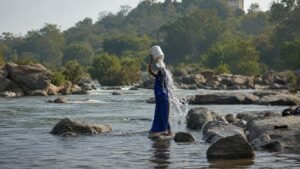
The court also drew attention to the failure to recognise the forest rights of local villagers. This is a critical issue because relocation cannot be examined solely through the question of compensation. Where communities possess rights recognised—or potentially recognisable—under the Forest Rights Act, those rights must be properly determined before decisions affecting their land and livelihoods are taken.
The judgment further raised concerns regarding the implementation of the Right to Fair Compensation and Transparency in Land Acquisition, Rehabilitation and Resettlement Act, 2013, particularly in relation to land acquisition and rehabilitation. The broader message is clear: statutory safeguards cannot become procedural formalities once a major project has been approved. They must operate as substantive protections for the people whose lives are directly affected.
For the Ken-Betwa project, this judicial precedent deserves careful consideration. Although the circumstances of every project and every village may differ, the principles concerning genuine consent, recognition of rights and lawful rehabilitation are directly relevant wherever communities are being relocated in the name of conservation or infrastructure.
The disparity in benefits makes the issue even more sensitive. Many of the communities facing displacement in Madhya Pradesh are not the principal beneficiaries of the irrigation expansion anticipated in Uttar Pradesh. They are therefore confronted with a particularly difficult equation: the immediate costs of the project are concentrated in their villages, while many of its projected economic benefits will materialise elsewhere.
That imbalance makes procedural fairness indispensable. When communities already perceive themselves as carrying a disproportionate burden, any failure to follow legal safeguards can deepen distrust and transform a development dispute into a conflict over rights.
There is also a larger constitutional principle at stake. Development projects undertaken in the public interest do not operate outside the framework of law. Public purpose must coexist with due process, equality, dignity and protection of legally recognised rights.
As tensions increase around displacement, compensation and rehabilitation, the possibility of confrontation should not be allowed to become the defining feature of the project. A peaceful resolution remains possible, but it requires the administration to engage affected communities through transparency rather than pressure, and through lawful procedures rather than expediency.
The Madhya Pradesh High Court’s ruling consequently offers more than a judicial warning. It provides a framework for avoiding conflict: recognise rights first, establish genuine consent where the law requires it, ensure fair rehabilitation, and treat affected communities as participants in development rather than as subjects of relocation.
For the Ken-Betwa project, compliance with these principles is not merely a matter of administrative correctness. It is central to whether a project presented as a solution to regional water insecurity can also claim to uphold the rights and dignity of the people living in its path.
Government’s Response
During the monsoon session of Parliament, the government announced that the Ken-Betwa Link Project is the sole priority link project under the National Perspective Plan (NPP) that has progressed to the implementation phase, while a total of 30 Interlinking of Rivers (ILR) projects have been recognized under this plan. In a written response to an inquiry in the Rajya Sabha, Minister of State for Jal Shakti, Raj Bhushan Choudhary, stated that the NPP was developed for the purpose of inter-basin water transfer, identifying 30 ILR projects, which include 16 link projects within the Peninsular component and 14 within the Himalayan component.
“The National Water Development Agency (NWDA) has been assigned the responsibility for the ILR projects,” the minister noted. The Ken-Betwa Link Project (KBLP), recognized as the only priority link project under the NPP that has commenced implementation, is projected to cost approximately Rs 44,605 crore. This project aims to provide irrigation to around 11.88 lakh hectares, supply drinking water to approximately 62 lakh individuals, generate 103 MW of hydropower, and produce 27 MW of solar power, as detailed in the response.
Furthermore, the Polavaram Irrigation Project (PIP), which includes the Godavari (Polavaram)-Krishna (Vijayawada) link, is designated as a national project and is being carried out by the Andhra Pradesh government along with the Polavaram Project Authority. This project is designed to irrigate about 7.2 lakh acres and stabilize 23.5 lakh acres within the Godavari and Krishna delta systems, divert 80 TMC of Godavari water to the Krishna basin, and provide drinking and industrial water supply, including to Visakhapatnam, as well as domestic water supply to around 28.5 lakh people across 611 villages, in addition to generating 960 MW of hydropower. Choudhary mentioned that the PIP has received a total central assistance of Rs 20,658 crore.
The response indicates that the 30 projects associated with the Peninsular and Himalayan components are at different stages, which include feasibility reports, detailed project reports (DPRs), pre-feasibility reports, and implementation.
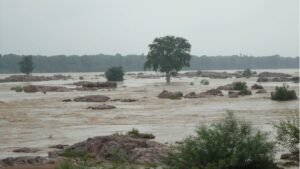
Within the Peninsular component, the revised Parbati-Kalisindh-Chambal link has a Memorandum of Agreement (MoA) for implementation that has been signed by Madhya Pradesh and Rajasthan, whereas the Ken-Betwa link has a finalized DPR and work has begun.
The Damanganga-Pinjal link and the Par-Tapi-Narmada link have completed DPRs but have been removed from the list of “priority links.” In the Himalayan component, the Sarda-Yamuna link has a completed DPR, while the Kosi-Ghaghra, Gandak-Ganga, and Ghaghra-Yamuna links have finalized feasibility reports. The Kosi-Mechi inter-state link has a completed pre-feasibility report, but the proposal has been withdrawn.
The government stated that the Kosi-Mechi inter-state link was dropped due to its international implications, and at the request of the Bihar government, the Kosi-Mechi intra-state link was examined by the National Water Development Agency (NWDA), with its DPR submitted to the state government.
The government also mentioned that environmental and socio-economic impacts are evaluated as part of the development of feasibility reports and DPRs for Interlinking of Rivers (ILR) projects.
Choudhary noted, “An Environmental Impact Assessment (EIA) is included in the preparation of Feasibility Reports (FRs) and Detailed Project Reports (DPRs) for each ILR project, which assesses environmental and socio-economic impacts.”
For the Ken-Betwa Link Project, a thorough EIA has been completed alongside an Integrated Landscape Management Plan, which details strategies for catchment-area treatment, landscape-level ecological management, biodiversity conservation, command-area development, and long-term monitoring of environmental parameters.
The government confirmed that for all ILR projects, including the Ken-Betwa Link Project, Land Acquisition and Rehabilitation and Resettlement (R&R) components are incorporated into the approved project framework. “Project execution conforms to applicable environmental, forest-clearance and R&R provisions,” the reply said.
IMPORTANT NOTE: The rehabilitation and relocation process covers 24 villages—16 associated with the Panna Tiger Reserve and eight linked directly to the Daudhan dam. Separately, project assessments indicate that 22 villages are proposed for evacuation, of which 10 are expected to be completely submerged.
Also Read:
Part One Link– https://thesamadrusti.com/5370/
Part Two Link – https://thesamadrusti.com/5384/
Comments
0 comments