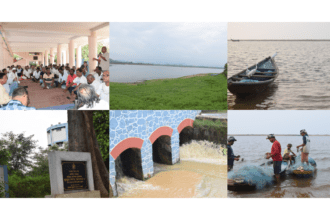


Development promises a better tomorrow, but for those displaced, tomorrow can mean the loss of yesterday—their homes, forests, memories and ancestral roots. The Ken-Betwa project must therefore become more than a symbol of infrastructure; it must test whether progress can protect those who pay its hidden price. As India builds for the future, the real question remains: development for whom, and sacrifice by whom? Bibhuti Pati Writes, ”The Ken-Betwa project, the people of Bundelkhand and the price of development”.
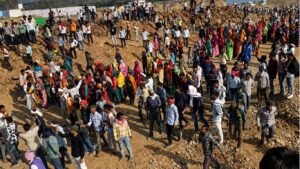
22 villages to be evacuated, 10 to be submerged
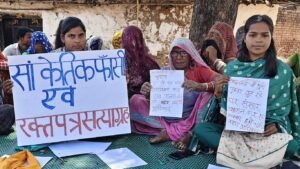
The Daudhan dam is expected to have a sweeping impact on communities in Panna and Chhatarpur districts. Twenty-two villages are proposed for evacuation, affecting more than 7,000 families, while 10 villages are expected to be completely submerged. Around 9,000 hectares of land could be inundated, including more than 4,141 hectares in the core area of the Panna Tiger Reserve and another 1,314 hectares in its buffer zone.
Most of the affected communities are Adivasis, including members of the Gond and Kol tribes. For them, the threatened loss is far greater than the physical structures recorded in official surveys. Their homes, farms, forests and the Ken river form part of a traditional livelihood system developed over generations.
The villagers are therefore demanding “village for village” and “land for land” rehabilitation, arguing that relocation should take place within a similar ecological setting so that their traditional way of life is not destroyed. They are also seeking an increase in compensation from Rs. 12.5 lakh to Rs. 25 lakh, along with greater transparency in property surveys and compensation assessments.
Bhatnagar has alleged that the principles and provisions of the Right to Fair Compensation and Transparency in Land Acquisition, Rehabilitation and Resettlement Act, 2013, have not been adequately followed. He has also questioned the manner in which information about the project and compensation was communicated to villagers.
One of his principal concerns is the process of obtaining consent from the gram sabha, which he says was not conducted transparently. According to him, several villagers were not even aware that such a meeting had taken place. The allegation points to a larger issue at the heart of the dispute: whether affected communities have been sufficiently informed and involved in decisions that could permanently alter their lives.
The challenges of rehabilitation in large river-linking projects have also been acknowledged by experts. Syamal Sarkar, former Secretary in the Union Ministry of Water Resources and a senior adviser at The Energy and Resources Institute in New Delhi, has noted that such projects inevitably involve substantial land acquisition for reservoirs, potentially submerging settlements and productive agricultural land.
Sarkar has argued for compensation packages designed around the specific circumstances of affected communities rather than relying solely on standard financial payments. Under the State government’s proposed rehabilitation package, compensation for private land is to be provided according to the applicable land acquisition law, subject to a minimum of Rs. 12.5 lakh per hectare, whichever is higher. The package also includes compensation for trees, orchards and structures such as sheds and huts, estimated at around Rs. 2 lakh, as well as compensation for houses acquired under the land acquisition provisions.
For the villagers, however, the question remains whether monetary compensation alone can adequately replace a landscape that provides not only land and shelter, but also livelihoods, social relationships and an enduring connection with the forest and river.
Biodiversity Issues
The environmental cost of the Ken-Betwa project has emerged as one of its most contentious dimensions. At the heart of the concern is the project’s impact on forests, wildlife and the ecological integrity of the Panna landscape. Government assessments estimate that around 17,101 trees will have to be felled for the project, including 12,404 trees within the Panna Tiger Reserve. For conservationists, these figures represent far more than the loss of individual trees: they signify the fragmentation and transformation of a forest ecosystem that supports a wide range of wildlife.
Himanshu Thakkar, coordinator of the South Asia Network on Dams, Rivers and People, has questioned the credibility of the environmental and forest clearance process. According to him, serious concerns raised during successive stages of appraisal were not adequately addressed. He has alleged that the decision-making process involved manipulation at different levels, including the Environment Ministry’s expert appraisal mechanism, the Forest Advisory Committee and the Madhya Pradesh State Wildlife Board. In his view, the approvals failed to sufficiently confront the ecological risks associated with the project.
The concerns were also reflected in the findings of the Central Empowered Committee, constituted by the Supreme Court. In August 2019, the committee submitted a report examining the wildlife clearance granted to the project and its likely consequences for the Panna Tiger Reserve and the riverine ecosystem. Among the issues it highlighted were the scale of tree felling, the possible effects on wildlife habitats and questions surrounding the project’s overall viability. The committee also suggested that less expensive and potentially less damaging alternatives to address Bundelkhand’s water scarcity deserved serious consideration.
The ecological implications extend beyond the submerged forest area. Altering the natural flow and character of a river can affect aquatic habitats, groundwater systems, vegetation and the movement of wildlife. The inundation of forested areas, coupled with the construction of associated infrastructure, can permanently change landscapes that have evolved over generations. For a region already facing ecological pressures, such intervention raises a fundamental question: can the benefits of transferring water from one basin to another justify the irreversible alteration of another natural system?
There is little doubt that the project has been conceived to address genuine developmental needs. Improved availability of water for drinking and domestic consumption, irrigation, drought mitigation and industrial requirements could bring significant benefits to parts of Bundelkhand. But these potential gains have to be assessed against the environmental and social costs. The displacement of communities, loss of forests and wildlife habitat, and alteration of river ecosystems cannot be treated merely as collateral consequences of development.
Environmentalist and researcher Sarkar argues that ecological considerations must be placed at the centre of planning rather than treated as a separate component to be addressed after the developmental blueprint has been prepared. Such an approach would require a broader assessment of the region’s natural water systems, forests, wetlands, groundwater reserves and traditional water-management practices before committing to large-scale engineering interventions.
The government, however, maintains that the project has received the requisite environmental and forest clearances in accordance with established procedures. Officials contend that the concerns raised by environmental groups and experts were examined during the appraisal and approval process. Dr. Rajesh Rajora has acknowledged that large infrastructure projects inevitably involve some environmental impact, but maintains that mitigation measures have been incorporated into the project framework. The stated objective, he argues, is to reconcile developmental requirements with long-term environmental protection.
Yet another fundamental question remains unresolved: does the Ken actually have a surplus of water to transfer?
Thakkar disputes the underlying hydrological premise of the project. He argues that available data do not establish a clear surplus in the Ken basin and that the perceived water deficit in the Betwa basin is linked, in part, to the extensive damming and alteration of its own river system. If that assessment is correct, the issue is not simply one of moving water from a “surplus” basin to a “deficit” basin, but of examining how existing water resources are being managed within both systems.
This question is particularly significant in Bundelkhand, where drought is shaped not only by rainfall variability but also by the degradation of traditional water-harvesting systems, declining groundwater reserves and the deterioration of local water bodies. Instead of relying exclusively on large-scale transfers, Sarkar advocates strengthening community-managed water resources, restoring ponds and traditional tanks, improving groundwater recharge and ensuring effective implementation of programmes such as Har Ghar Jal.
The debate, therefore, goes beyond whether the Ken-Betwa project can deliver water. It concerns the kind of water security that Bundelkhand should pursue. A network of restored ponds, functioning traditional reservoirs, healthy forests and replenished aquifers may not carry the visual grandeur of a massive dam, but these systems can provide resilience at the community level while retaining the ecological functions of the landscape.
The Ken-Betwa project thus stands at a difficult intersection of development and conservation. Its success cannot ultimately be measured only in kilometres of canals constructed, hectares irrigated or households supplied with water. It must also be judged by what remains of the forests, rivers, wildlife habitats and communities that bear its environmental cost. For Bundelkhand, the larger challenge is not merely to bring more water into the region, but to build a water system that can endure without exhausting the natural systems on which its future depends.
Compensation, Rehabilitation and the Human Cost
The government’s response to the hydrological question is unequivocal. Officials maintain that the Ken-Betwa project is based on detailed hydrological assessments drawing upon long-term data, which indicate the availability of surplus water in the Ken basin during the monsoon period. Dr. Rajesh Rajora points to the National Water Development Agency (NWDA), established at the national level to undertake studies related to river-linking proposals. According to him, the agency has worked with statutory bodies and technical institutions to assess water availability, basin characteristics and the feasibility of the proposed transfer. From the government’s perspective, therefore, the project rests not on assumption but on extensive scientific and institutional assessment.
But for the people living in the project-affected villages, the most immediate question is not how much water the Ken can spare. It is what they will lose when the water arrives.
Across the affected landscape, concerns over compensation and rehabilitation have become almost as important as the question of the dam itself. For families whose homes, farmland and ancestral surroundings are tied to their identity and livelihood, monetary compensation cannot always be measured simply against the market value of a house or an acre of land. The loss also encompasses community networks, access to forests, agricultural practices, cultural spaces and a way of life built over generations.
The gap between the compensation announced on paper and what some families say they have actually received has added another layer of anxiety. The government has announced compensation of ₹6 lakh for houses between 30 and 40 years old and ₹12.5 lakh per acre for land. Yet reports from affected areas have documented cases in which tribal families allegedly received extremely small amounts, with some reported payments as low as ₹16. Other families have claimed that they have received no compensation at all.

Such discrepancies raise a crucial question: how can rehabilitation be considered successful if the people surrendering their homes and livelihoods remain uncertain about what they are entitled to receive?
A report published by Down to Earth further highlighted concerns over the manner in which affected families were being dealt with. According to the report, many families were categorized as eligible primarily for a cash package of ₹12.5 lakh, while only around 40 per cent had reportedly received the amount through deposits in their bank accounts at the time of reporting. For displaced communities, however, rehabilitation is not merely a financial transaction. The traditional principle of land in lieu of land seeks to preserve a family’s livelihood, while village in lieu of village recognizes that communities themselves are social institutions that cannot simply be reconstructed through individual cash payments.
A village is more than a collection of houses. It is a network of relationships, shared memories, agricultural practices, festivals, places of worship and common resources. When an entire settlement is displaced, these invisible bonds can be lost even when new houses are provided elsewhere. The challenge for rehabilitation, therefore, is not simply to construct new structures but to recreate the conditions under which displaced families can rebuild dignified and sustainable lives.
This becomes particularly significant for tribal households and forest-dependent communities. Their relationship with land may extend well beyond formal ownership documents. Forests can provide fuel, food, medicinal plants, grazing resources and seasonal income, while rivers and streams form part of both their livelihood and cultural landscape. A compensation package calculated primarily in monetary terms may fail to account for these less visible but essential forms of economic and social security.
The issue also exposes a wider contradiction in India’s development model. Large infrastructure projects are generally justified in terms of the benefits they will deliver to millions, while the costs are often concentrated among a comparatively small number of communities living at the project site. The people who surrender their land and homes may therefore receive the least direct benefit from the infrastructure built upon their displacement.
That does not mean development should be rejected. Roads, irrigation, drinking water and drought mitigation are legitimate public needs, particularly in a region such as Bundelkhand, where water insecurity has shaped everyday life for decades. The real question is whether those who sacrifice their homes and livelihoods for such projects are being treated as partners in development or merely as obstacles to its implementation.
The answer will ultimately depend on what happens on the ground. Transparent enumeration of affected families, independent verification of compensation claims, timely payment, livelihood restoration and meaningful participation of local communities in rehabilitation planning are essential if the project is to claim social legitimacy. Rehabilitation must also be monitored long after families move to new locations; the completion of a resettlement package cannot be treated as the completion of rehabilitation.
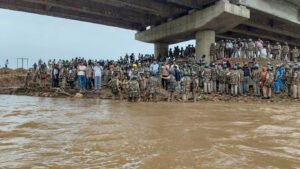
The Ken-Betwa project therefore presents two very different narratives. From the government’s perspective, it is a carefully studied intervention intended to address water scarcity, supported by hydrological data, institutional assessments and a framework for compensation and rehabilitation. From the perspective of many affected families, however, it is a profound disruption whose costs are immediate, personal and irreversible.
Between these two narratives lies the real test of development: whether a project designed to secure water for one region can do so without leaving the people who surrender their land and homes feeling that their own future has been sacrificed in the process.
And that brings the debate back to its most fundamental question—not simply how much water the project will deliver, but who will pay the price for bringing it there.
This is the Second part of a three-part series, “WHOSE WATER, WHOSE FUTURE?”, on the Ken-Betwa Project.
Comments
0 comments