
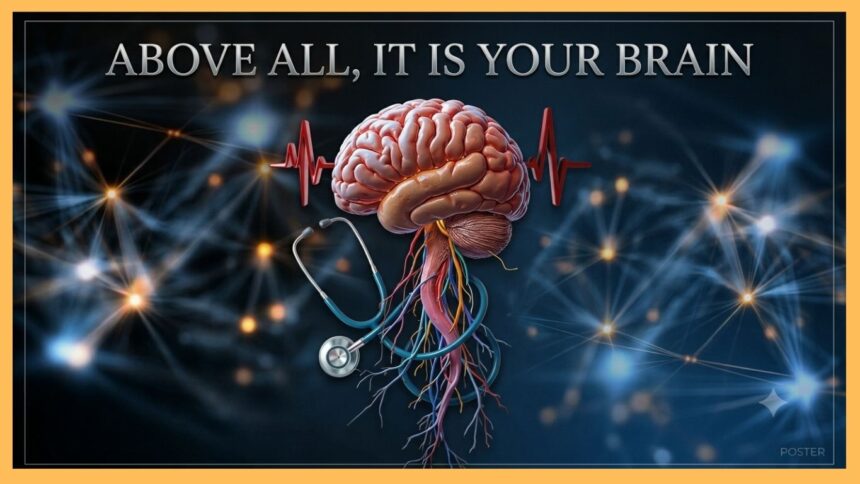
Every year on 22 July, doctors and health workers across the world observe World Brain Day, an initiative of the World Federation of Neurology. This year’s theme, “Brain Health: Access for All,” speaks to a simple but urgent truth: while medical science has made remarkable progress in understanding and treating diseases of the brain, this progress has not reached everyone equally.
A Silent but Massive Burden
Conditions affecting the brain and nervous system — stroke, epilepsy, migraine, Parkinson’s disease, dementia, and nerve disorders — are now among the leading causes of disability and death worldwide. Nearly one in every two people on the planet is estimated to be living with some form of neurological condition. Yet in many parts of the world, including large stretches of our own country, there is less than one neurologist for every million people. Patients in under-served areas often wait years after their first symptom before they see a specialist — a delay that can mean the difference between recovery and permanent disability.
Where the Gaps Lie
As a practising neurologist, I see these gaps play out every day in the hospital and clinic: Too few specialists, especially outside big cities, and long waiting times to see one. Families not recognising warning signs — sudden weakness, seizures, memory loss, tremor — early enough to seek help. Limited access to essential scans, tests, and medicines in smaller towns and rural areas.
Lingering stigma around conditions like epilepsy and dementia, which stops people from seeking timely treatment. Everyday risk factors — high blood pressure, diabetes, smoking, poor sleep, physical inactivity, and chronic stress — that quietly damage the brain over years but go unaddressed.
What Can Be Done
The encouraging news is that much of this burden is preventable or manageable, if we act early and together:
Know the warning signs. Sudden facial droop, arm weakness, or slurred speech can signal a stroke — seek emergency care immediately, since “time is brain.” A seizure, persistent memory decline, or unexplained tremor should prompt a doctor’s visit, not be dismissed as normal ageing or ignored out of fear.
Control the everyday risk factors. Regular blood pressure and blood sugar checks, a balanced diet, daily physical activity, adequate sleep, and avoiding tobacco and excess alcohol meaningfully lower the risk of stroke and dementia in later life.
Bring care closer to home. Training family doctors to recognise and begin first-line treatment for common conditions, and using video consultations to connect patients with specialists, can shorten the long wait many families currently face.
Talk about it openly. Epilepsy, dementia, and other brain conditions are medical illnesses, not something to hide. Open conversation in families and communities encourages earlier diagnosis and better care.
Support local and national efforts. Community health camps, school awareness programmes, and inclusion of neurological care in public health policy all help close the access gap over time.
A Shared Responsibility
The brain governs everything we do — how we think, move, feel, and remember. Protecting it deserves the same everyday attention we give to heart health. This World Brain Day, the message is simple: brain health is not a privilege for the few, but a right for all. Recognising symptoms early, adopting brain-healthy habits, and supporting wider access to neurological care are steps every one of us — patients, families, doctors, and policymakers alike — can take together.
(The writer is a Senior Neurologist and Secretary of the Neurological Association of Odisha (NAO).)
Comments
0 comments